


Cat 6 vs Cat 6A Ethernet Cable: Which One Do You Actually Need?
Picking the right ethernet cable sounds simple until you’re staring at two nearly identical options on a product page and wondering whether the price difference actually matters. Cat 6 or Cat 6A? For most people buying cable for a home office or small business network in Australia, the choice feels more confusing than it needs to be.
Here’s the good news: it doesn’t have to be complicated. Once you understand what each cable actually does in the real world, the right choice becomes pretty obvious for your situation.
In this post, we’re breaking down the practical differences between Cat 6 and Cat 6A ethernet cable in plain language, no engineering degree required. You’ll learn what each cable delivers, which one suits everyday home and office setups, when spending more on Cat 6A is genuinely worth it, and what Australian pricing looks like so you can budget with confidence. We’ll also cover some handy tips before you buy or install anything.
By the end, you’ll know exactly which cable to grab without second-guessing yourself or paying more than you need to.
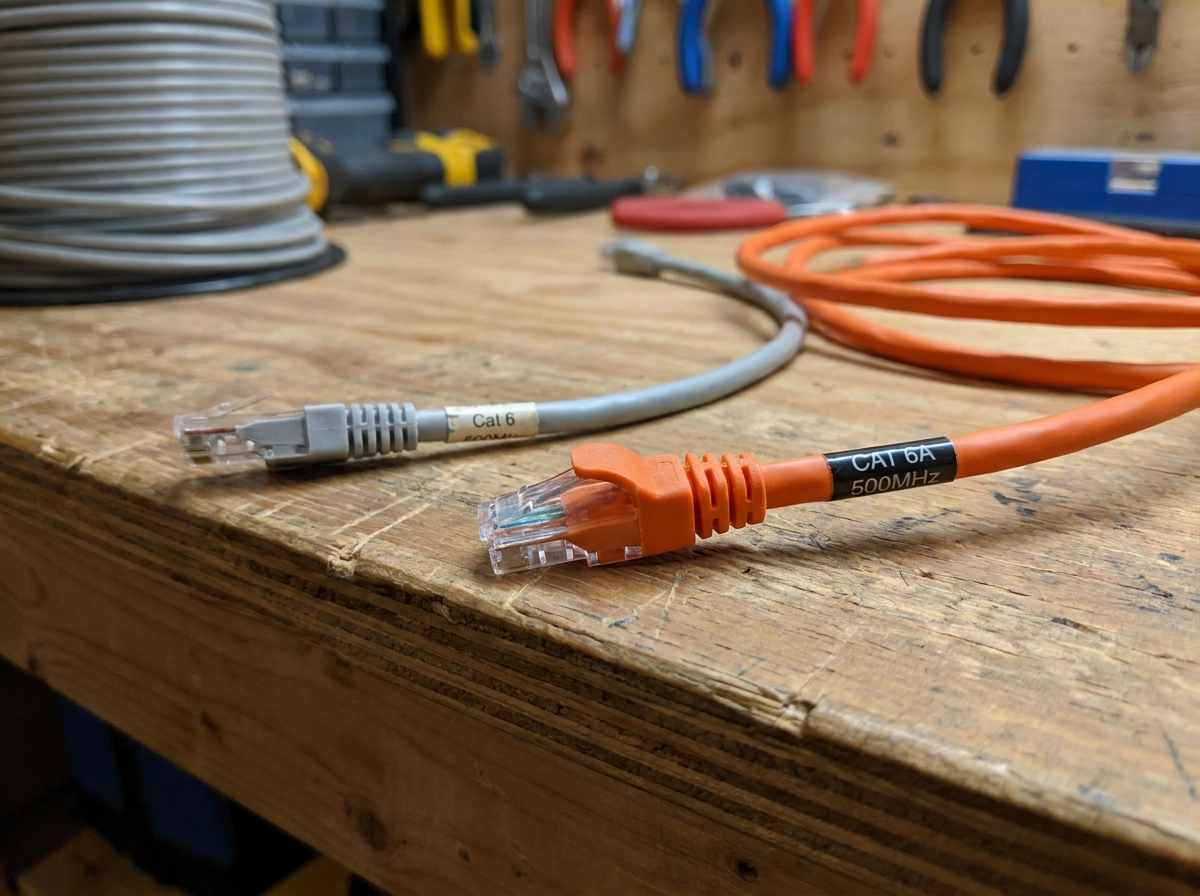
Cat 6 vs Cat 6A: The Key Differences at a Glance
Here’s what separates these two cable types before anything else: frequency and distance.
A Cat 6 ethernet cable runs at 250 MHz and supports 10Gbps, but only across runs up to 55 metres. Push beyond that and it drops back to 1Gbps. Cat 6A doubles the frequency to 500 MHz and sustains 10Gbps for the full 100-metre length that structured cabling standards allow.
| Spec | Cat 6 | Cat 6A |
|---|---|---|
| Standard | TIA-568-C.2 | TIA-568-C.2-1 |
| Frequency | 250 MHz | 500 MHz |
| Max speed | 10Gbps (to 55m), 1Gbps beyond | 10Gbps (to 100m) |
| Max distance at 10Gbps | 55 metres | 100 metres |
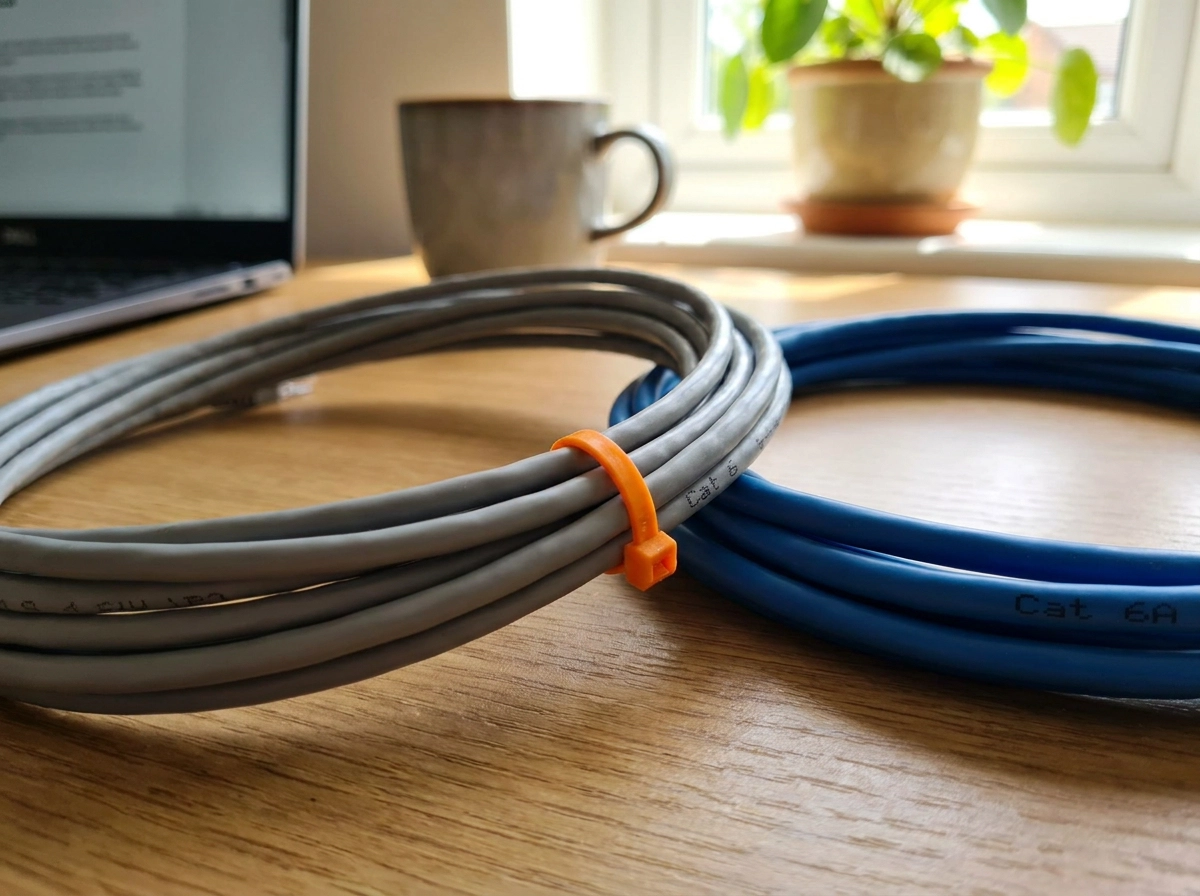
| Typical cable diameter | ~6mm | ~7–8mm |
| Approx. Australian cost per metre | $0.50–$1.00 | $0.80–$1.60 |
That extra performance comes with a physical trade-off. Cat 6A is noticeably bulkier, thanks to additional shielding or a thicker internal separator. This can make a real difference when you’re pulling cable through tight conduit or existing wall cavities.
Both standards are fully backward compatible. A Cat 6A cable plugs straight into older switches and routers without issue, and Cat 6 cable works fine on Cat 6A-capable hardware. You can browse compatible patch cable options to see what suits your setup.
The standards references (TIA-568-C.2 and TIA-568-C.2-1) are what electricians and network installers cite when specifying structured cabling for a building project.
What Cat 6 Ethernet Cable Actually Delivers
So what does a cat 6 ethernet cable actually get you in practice?
Quite a lot, as it turns out. Cat 6 handles gigabit speeds (1Gbps) reliably across the full 100-metre maximum run for twisted-pair ethernet. For shorter runs under 55 metres, it can push 10Gbps, which comfortably covers the typical home or small office cable run between a router, switch, and your devices.
That 55-metre 10Gbps window matters more than it might seem. Most patch cable runs inside a home or small office are well under 20 metres, so you’re sitting in the sweet spot without even trying.
The NBN angle is worth noting too. Australia’s fastest residential broadband plans top out at around 1Gbps on HFC and FTTP connections. Cat 6 handles that with headroom to spare. You are not leaving any speed on the table by choosing it for a home setup.
Construction-wise, Cat 6 uses tighter wire twisting and a plastic spline separator running down the centre of the cable. This internal spine keeps the wire pairs separated and reduces crosstalk, which is interference between pairs. The result is a noticeably more capable cable than Cat 5e, without the bulk or cost that comes with Cat 6A.
For everyday use, including video calls, NAS storage access, online gaming, and large file transfers, a quality Cat 6 patch cable like this Astrotek 0.25m option hits the practical sweet spot between performance and price for most Australians.
What Cat 6A Ethernet Cable Actually Delivers
Cat 6A takes everything Cat 6 does and pushes it further. The “A” stands for Augmented, and the key upgrade is bandwidth: Cat 6A runs at 500 MHz, double the 250 MHz of Cat 6, and sustains full 10Gbps throughput across the entire 100-metre run. With Cat 6, that 10Gbps capability cuts out after 55 metres. For longer commercial runs, that difference matters enormously.
Most Cat 6A cables also include shielding around the wire pairs, typically described as F/UTP or S/FTP construction. This shielding dramatically reduces alien crosstalk, which is interference between adjacent cables. In a home with two or three cables, crosstalk is a non-issue. In a commercial installation where dozens of cables run tightly bundled through the same conduit, it becomes a genuine problem that Cat 6A’s shielding is specifically designed to solve.
Cat 6A is also the recommended standard for PoE++ devices like IP cameras, wireless access points, and VoIP phones. These devices draw sustained power through the cable, generating heat in the process. The thicker cable construction handles that heat load more reliably over time.
The trade-off is physical. Cat 6A typically measures 7 to 8mm in diameter versus around 6mm for Cat 6. It is heavier, stiffer, and noticeably harder to pull through existing wall cavities or conduit. That installation effort is a real consideration.
For new commercial builds in Australia, Cat 6A is increasingly the specified standard, particularly in offices planning for 10GbE switching or high-density Wi-Fi 6/6E access points.
When Cat 6 Is More Than Enough for Your Setup
Cat 6A is a genuinely impressive standard, but for most Australians it’s simply more cable than the job requires.
If you’re connecting to an NBN service at home, Cat 6 covers you completely. Even on the fastest residential NBN plans (1Gbps HFC or FTTP), Cat 6 has headroom to spare. And in a typical house, cable runs between a router and a room rarely exceed 30 to 40 metres, well within Cat 6’s comfort zone.
The same logic applies to home office use. A cat 6 ethernet cable running from your router to your desk delivers solid 1Gbps for video calls, cloud storage access, and everyday productivity. There is no measurable difference between Cat 6 and Cat 6A for these tasks.
Gaming and media streaming fall into the same category. Online gaming needs low latency and consistent throughput, not raw bandwidth headroom. Cat 6 delivers both. Cat 6A’s extra capacity simply has no real-world job to do here.
For small offices with short patch cable runs under 20 metres between a desk and a gigabit switch, upgrading to Cat 6A adds cost with nothing to show for it. If your switching infrastructure tops out at 1Gbps, the cable spec above that threshold is irrelevant.
Finally, if you’re adding ethernet to a rental property or renovating on a budget, Cat 6 is the practical choice. It’s cost-effective per metre, easy to work with, and an 8Ware Cat 6A patch cable is always an option if one specific run needs the upgrade without reworking the whole install.
When Upgrading to Cat 6A Ethernet Cable Is Worth It
That said, there are clear situations where Cat 6A earns its place. Here is when the upgrade genuinely makes sense.
Long commercial cable runs. Cat 6 drops to 1Gbps beyond 55 metres. If you need sustained 10Gbps across a full 100 metre run in a warehouse, school, or multi-storey office, Cat 6A is the only twisted-pair option that reliably delivers it.
PoE++ powered devices. IP security cameras, wireless access points, and VoIP desk phones draw continuous power through the cable. Cat 6A handles the heat that sustained PoE++ loads generate far better than Cat 6, reducing the risk of performance degradation over time.
New commercial builds. Cabling installed inside walls and conduit today may not be touched for 10 to 15 years. Specifying ethernet cable cat 6a in a new build now means you will not need to re-cable when 10GbE to the desktop becomes standard. An 8Ware Cat 6A patch cable is a practical starting point for testing Cat 6A terminations before committing to a full installation.
High-density conduit runs. When dozens of cables run side by side through the same tray, Cat 6 can suffer from alien crosstalk. Cat 6A’s superior shielding keeps signal clean even in tightly packed environments.
Wi-Fi 6 and Wi-Fi 6E access points. These access points aggregate traffic from multiple clients simultaneously. A 10Gbps-capable Cat 6A uplink back to the core switch ensures the backhaul does not become the bottleneck.
Cat 6 vs Cat 6A Pricing: What to Expect in Australia
So now you know when Cat 6A is worth it. The next question is: how much more will it actually cost you?
Cat 6 ethernet cable comes in two main forms: pre-made patch cables in common lengths (0.5m, 1m, 2m, 3m, 5m, and 10m) and bulk spools for larger jobs (typically 30m, 50m, 100m, and 305m). For most home and desk setups, a few patch cables are all you need.
Cat 6A carries a price premium of roughly 30 to 60% more per metre compared to Cat 6, depending on the brand, shielding type, and format. The gap narrows slightly on bulk spools but stays noticeable on individual patch cables.
For a home office needing two or three short patch cables, that premium might only add a few dollars per cable. Not a deal-breaker. But scale that up to a 10-drop office installation, and the cost difference across cable, keystone jacks, and patch panels adds up meaningfully.
Cable cost is only part of the picture for structured cabling projects. Cat 6A is thicker and less flexible, so it takes longer to pull through conduit or wall cavities. That extra labour time has a real cost, especially if you are paying a cabler by the hour.
Ezy PC Sales stocks both Cat 6 and Cat 6A cables across a range of lengths at competitive Australian prices, with fast local delivery. Check the ethernet cable range for current pricing on specific SKUs before you buy.
Practical Tips Before You Buy or Install
Before you place your order, a few quick checks can save you money and hassle.
Measure your runs first. Grab a tape measure or use a cable calculator app and find your longest planned run. If everything in your setup sits under 40 metres, Cat 6 will perform identically to Cat 6A in practice. There is no real-world speed or reliability gain from upgrading when your distances are that short.
Think ahead for in-wall cabling. Permanent runs inside walls or ceilings are expensive to replace later. If there is a reasonable chance you will be connecting 10GbE switches or Wi-Fi 7 access points within the next decade, Cat 6A makes sense for those fixed runs specifically. For everything else, Cat 6 is fine.
Keep patch cables in perspective. The cable between your laptop and a wall plate is almost always under 3 metres. Even in a full Cat 6A installation, there is no technical benefit to using Cat 6A patch cables at the desk. Cat 6 patch cables work perfectly there.
Check your hardware before upgrading. If your switch and network card only support 1Gbps, Cat 6A cable will not make your connection any faster. The switch is the bottleneck, not the cable. Upgrade the hardware first if speed is the goal.
Order more cable than your measurements suggest. Actual runs through walls, across ceilings, and down conduit are always longer than the straight-line distance. Add 15 to 20 percent to your measured length so you are not caught short mid-installation.
The Honest Verdict: Which Cable Should You Buy?
Once you’ve measured your runs and thought through your setup, the decision usually comes down to this.
For the vast majority of Australian homes and home offices: buy Cat 6. It handles every current NBN speed tier, covers any realistic residential cable run, and costs noticeably less than Cat 6A. There is no practical performance gap for home use.
For small and medium businesses running structured cabling to 10GbE switches, PoE cameras, or Wi-Fi 6 access points over runs longer than 55 metres, Cat 6A is the right call and worth the extra spend.
If you’re cabling a new build with cables going inside walls permanently, Cat 6A is a reasonable future-proofing choice for those in-wall runs specifically. Just be honest with yourself about whether your current hardware, or anything you’re likely to buy in the next few years, will actually use that headroom.
When in doubt: Cat 6 for patch cables and short desktop connections, Cat 6A only for permanent in-wall or in-conduit infrastructure in commercial settings.
Ezy PC Sales stocks both cat 6 ethernet cable and ethernet cable cat 6a options across a range of lengths, from short 0.5m patch cables through to bulk spools, with competitive Australian pricing and fast delivery across the country. You don’t need to over-buy to get a reliable network; you just need the right cable for your actual situation.
The Bottom Line
To put it simply: Cat 6 is the right cable for most Australians. It handles every current NBN speed, covers realistic home and small office run lengths, and costs less than Cat 6A.
Cat 6A earns its price premium in four clear situations: runs longer than 55 metres, PoE-heavy deployments like IP cameras and access points, high-density bundled cabling, and permanent structured cabling in new commercial builds where you won’t be pulling cable again for a decade.
If you’re still unsure which to choose, ask yourself one question: are any of my cable runs longer than 55 metres, and will I be running PoE devices or planning for 10GbE switches? If the answer is no, Cat 6 is your cable.
Ezy PC Sales stocks both Cat 6 and Cat 6A across a range of lengths, from short patch cables to bulk spools. Stock is held locally in Australia, so you’re not waiting weeks for delivery. Browse the ethernet cable range online and order with confidence knowing your cable will arrive quickly, wherever you are in the country.
Conclusion
Choosing between Cat 6 and Cat 6A does not have to be complicated. For most homes and small offices, Cat 6 delivers everything you need at a price that makes sense. Cat 6A is the smarter investment when runs exceed 55 metres, PoE devices are involved, or you are future-proofing a permanent commercial installation.
The right cable saves you money today and avoids expensive re-runs tomorrow. Know your run lengths, know your devices, and buy accordingly.
Ready to build a network that actually performs? Ezy PC Sales stocks a full range of Cat 6 and Cat 6A cables across multiple lengths, with stock held locally in Australia for fast nationwide delivery. Browse the range online, pick the cable that fits your setup, and get your network running the right way from day one.